

Waterfront Living with Everyday Walkability
Port Credit has long been one of Mississauga’s most lifestyle-driven neighbourhoods, known for its waterfront setting, walkable village core, and strong sense of local identity. Unlike many car-dependent suburban areas, Port Credit offers a version of daily life where errands, commuting, and leisure often happen on foot, by bike, or by train – making it especially appealing to buyers and renters who prioritize experience as much as space.
Life in Port Credit revolves around Lake Ontario, the harbour, and the main street lined with independent shops, cafés, restaurants, and services. There’s a distinct community energy here that comes from a mix of long-time residents, professionals commuting downtown, and newcomers drawn to the neighbourhood’s balance of vibrancy and calm. For buyers, Port Credit offers character and connectivity. For investors, it delivers consistent demand rooted in transit access and lifestyle appeal.
As part of a broader real estate guide for buyers and investors across the GTA, this deep dive into Port Credit explores what it’s like to live here, how the housing market is structured, and how the Port Credit rental market performs over the long term.

Where Port Credit Fits Within Mississauga
Port Credit is located in south Mississauga, along the Lake Ontario shoreline, just west of the City of Toronto. Its position makes it one of the most transit-connected neighbourhoods outside the downtown core, particularly for commuters heading into Toronto.
The Port Credit GO Station is a major anchor for the community, offering regular service along the Lakeshore West line. This makes downtown Toronto accessible without relying on a car, a factor that strongly influences both buyer demand and rental appeal. Major roadways, including the QEW, are also nearby, supporting east–west travel across the GTA.
For buyers comparing Port Credit to other Mississauga neighbourhoods, its proximity to the lake and transit infrastructure often places it in a category of its own.
The Overall Neighbourhood Feel
Port Credit is best described as vibrant but livable. The main streets are active, especially on weekends and during warmer months, yet quieter residential pockets sit just a few blocks away. This balance allows residents to enjoy restaurants, events, and waterfront trails without feeling like they live in a constant tourist zone.
Walkability is a defining feature. Many residents structure their routines around walking to coffee shops, grocery stores, the marina, or the GO station. The waterfront trail system plays a central role in daily life, connecting Port Credit to neighbouring communities and offering uninterrupted lake views that are used year-round.
This strong sense of place is a major reason why homes for sale in this area continue to attract buyers who are as focused on lifestyle as they are on square footage.

Waterfront, Parks, and Community Infrastructure
The lake is not just a backdrop in Port Credit – it’s a core part of how the neighbourhood functions. Port Credit Harbour, J.C. Saddington Park, and the surrounding waterfront trail system create a continuous green corridor that supports walking, cycling, and community events.
These spaces are heavily used for everything from morning jogs and dog walks to festivals and casual weekend gatherings. Unlike newer master-planned communities, Port Credit’s infrastructure evolved alongside the neighbourhood, contributing to its character and lived-in feel.
For buyers, proximity to the water often enhances long-term enjoyment and resale appeal. For renters, access to waterfront space significantly increases lifestyle value without requiring ownership of a detached home.
Housing Options and Market Characteristics
One of the defining features of Port Credit real estate is the diversity of housing types within a relatively compact area. The neighbourhood includes older detached and semi-detached homes on established streets, townhomes, and a growing number of modern condo developments concentrated near the waterfront and transit corridors.
Older homes often come with larger lots and architectural character, but they may require ongoing updates or renovations. Condo developments, particularly newer ones, tend to appeal to buyers seeking lower maintenance living with strong walkability and transit access.
When browsing Port Credit condos or low-rise housing options, buyers are often balancing charm and location against renovation scope, parking availability, and long-term upkeep.
Practical Considerations for Buyers
Buying in Port Credit is as much about understanding the micro-location as it is about choosing a home style. Small differences in distance to the lake or GO station can significantly affect pricing, noise levels, and daily convenience.
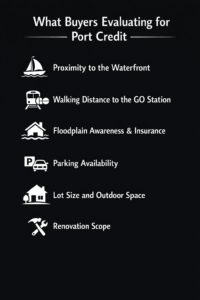
Buyers evaluating Port Credit properties often consider the following factors:
- Proximity to the lake and waterfront trails
- Walking distance to the Port Credit GO Station
- Floodplain awareness and insurance considerations near the water
- Parking availability, particularly for older homes and condos
- Lot size and outdoor space
- Renovation scope and long-term maintenance for older properties
These considerations play a major role in both livability and future resale value, especially in a neighbourhood where lifestyle premiums are already built into pricing.
What Drives Buyer Demand in Port Credit
Demand in Port Credit is driven less by sheer size and more by location and usability. Homes that offer walkability, efficient layouts, and outdoor space – whether that’s a yard, balcony, or terrace – tend to perform best.
For condo buyers, thoughtful floor plans, in-suite laundry, and parking are especially important. Lake views can command a premium, but many buyers are equally focused on proximity to transit and main street amenities.
Since inventory varies widely by housing type, buyers often benefit from neighbourhood-specific guidance when narrowing their search, particularly when comparing older homes to newer developments.
Port Credit as a Rental Market
From an investment standpoint, Port Credit’s rental market is strongly lifestyle-driven. Renters are often drawn to the area because it allows them to live car-light or car-free, commute efficiently, and enjoy waterfront living without the cost of ownership.
Typical renters include young professionals, downsizers, and couples who value transit access and walkability. Demand is particularly strong for well-designed one- and two-bedroom units in buildings close to the GO station or lakefront.
Features that consistently perform well in rental properties include updated finishes, in-suite laundry, balconies, and parking. Units with partial or direct lake views often attract premium rents, though investors must weigh this against higher purchase prices and condo fees.
Balancing Lifestyle Appeal and Investment Returns
One of the key considerations for investors in Port Credit is balancing lifestyle-driven demand with long-term financial performance. Properties closest to the water often command higher purchase prices, which can compress returns if not evaluated carefully.
Condo fees are another factor, particularly in newer waterfront buildings with extensive amenities. While these features can enhance tenant appeal, they should be assessed alongside realistic rent expectations and long-term maintenance planning.
That said, Port Credit’s consistent demand, transit connectivity, and limited supply of true waterfront neighbourhoods support its reputation as a stable, long-term rental market rather than a speculative one.
Shopping, Dining, and Everyday Convenience
Port Credit’s village core is one of its defining characteristics. Independent shops, restaurants, cafés, and everyday services line the main streets, creating an environment where daily errands rarely require a car.
Grocery stores, fitness studios, medical clinics, and professional services are all accessible within the neighbourhood, reinforcing its reputation as a self-contained community. This level of convenience is a major draw for both buyers and renters who prioritize time and walkability.
Is Port Credit the Right Fit?
Port Credit tends to appeal most to buyers and investors who value walkability, waterfront access, and transit connectivity over sheer home size. It attracts people who want daily life to feel engaging – where coffee shops, waterfront trails, and the GO station are part of the routine rather than weekend destinations. For these buyers and renters, lifestyle often outweighs square footage.
That said, Port Credit isn’t a one-size-fits-all neighbourhood. Pricing can vary significantly block by block, older homes may require renovation planning, and condo options come with different fee structures and long-term considerations. Understanding how proximity to the lake, transit access, and housing type affect both livability and value is key to making a confident decision here.
For buyers and investors comparing Port Credit with other lakeshore or transit-oriented neighbourhoods, working with someone who understands these micro-market differences can make the process far more efficient. Having a clear strategy – whether that’s prioritizing walkability, rental performance, or long-term resale – often starts with a conversation with a local expert who knows how Port Credit truly functions beyond the listings, making it a natural point to connect with Lisa when narrowing down your next move.
Lisa’s Tip 💡
In Port Credit, location often matters more than finishes. A well-laid-out home or condo within walking distance of the lake and GO station will often outperform a larger or more upgraded property that sacrifices walkability.