

For most first-time buyers, knowing when to start planning for a first home starts long before they walk into an open house or schedule a mortgage appointment. In fact, the most successful – and least stressful – home purchases often begin quietly, months or even a full year before a buyer is officially “ready.” Whether your dream is a cozy condo in Ottawa, a starter home in Barrie, or a charming semi in a growing small town, early planning gives you more clarity, more control, and far more confidence when it’s finally time to make a move. If you’ve been wondering when to start planning for your first home, the real answer is: sooner than you think.
In Ontario’s evolving housing landscape, knowing when to start planning for a first home has become one of the biggest advantages first-time buyers can give themselves. Markets shift, interest rates fluctuate, and inventory levels change from season to season – but buyers who take the time to prepare well in advance are consistently in a stronger position. They understand their numbers, their needs, and their opportunities. Instead of reacting to the market, they approach the process intentionally, with a clear sense of what’s realistic and what steps they need to take next.
This guide is designed to help you map out that preparation timeline. Whether you’re a year away from buying or hoping to get started in the next few months, this roadmap will help you build the foundation you need to feel prepared, empowered, and excited – not overwhelmed – when your home-buying journey truly begins.
Why Early Planning Matters More Than Ever
Many first-time buyers start planning for a first home the opposite way: by scrolling through MLS listings, picking out favourite neighbourhoods, or imagining how they’ll style their future living room. Those steps are fun – and totally normal – but they rarely reflect the true starting point of a successful purchase. Instead, the real work happens behind the scenes: building savings, improving credit, understanding what you can comfortably afford, and getting your financial picture fully organized long before you schedule a viewing.
When you start planning for a first home early, it puts you in a position of strength. Homeownership is a significant financial milestone, and giving yourself time creates breathing room. You can save at a steady pace instead of scrambling. You can improve your credit score gradually, which can help you secure a more favourable interest rate. You can evaluate different mortgage products, understand first-time buyer incentives, and explore communities across Ontario with a realistic budget in mind.
Most importantly, early planning gives you flexibility. If the right home appears unexpectedly – because that happens more often than you’d think – you’ll be ready. Even if it takes more time to find a property you love, you’ll navigate the journey with far more confidence because you’ve already laid the groundwork. Buyers who plan early rarely feel rushed; instead, they feel prepared.

Your Home-Buying Timeline: What to Do and When to Begin
Every buyer’s circumstances are different, but there is a clear rhythm to the preparation stage. Think of this timeline as a general guide that you can adjust based on your goals, your income, and where you hope to buy within Ontario. Some clients start 6 months before buying, others 18 months before, but most fall somewhere in between. What matters isn’t how quickly you move – it’s that you understand why each stage matters and how it sets you up for success.
12 Months Out: Build the Foundation
We recommend you start planning for a first home a full year ahead. A full year before buying may feel early, but this stage is where the most impactful preparation happens. One of the first steps is to start saving with intention. Your down payment, closing costs, and moving expenses will all draw from this pool. Setting up an automatic transfer – even a modest one – helps grow that nest egg without constant effort. Some buyers channel bonuses or tax returns toward their savings goals, while others adjust their monthly budget gradually so they can contribute more over time.
This is also when you should check your credit score and review your credit report when you start planning for a first home. In Canada, you can access this information through Equifax or TransUnion, both trusted reporting agencies. Understanding your score is essential because even small improvements can positively impact the mortgage rates you qualify for. If you find any errors on your report, addressing them early gives you enough time to correct discrepancies before applying for financing.
A year out is also the perfect time to start educating yourself about Ontario’s housing market – not obsessively, but consistently. Explore different neighbourhoods and local listings, watch how prices shift over time, and get familiar with local trends.
6–9 Months Out: Strengthen Your Financial Picture
By this point, the journey to start planning for a first home begins to feel real. Your savings are building, your credit score is improving, and you’re starting to get a clearer sense of what’s possible. Now is the time to refine your budget and assess your current spending habits. Many first-time buyers discover that small adjustments – like reducing subscriptions, planning meals, or paying down smaller debts – can free up hundreds of dollars over time.
Reducing debt is especially important when you start planning for a first home. Mortgage lenders look carefully at your debt-to-income ratio, and paying off credit cards or minimizing other liabilities can improve your approval odds and potentially increase the mortgage amount you qualify for. This period is also ideal for booking an initial conversation with a mortgage professional. Even if you’re months away from buying, an early consultation helps you understand your affordability range and gives you time to correct anything that might negatively affect your application.
3–6 Months Out: Get Mortgage Ready
At this stage, your preparation starts to shift from general readiness to actionable steps. Begin gathering the financial documents you’ll need for a mortgage application – recent pay stubs, employment letters, tax returns, bank statements, and records of any outstanding debts. Having everything organized in advance makes the pre-approval process smoother and faster.
Once your documents are assembled, it’s time to get pre-approved for a mortgage. This step is crucial. A pre-approval not only clarifies your exact budget, but it also strengthens your position when you find a home you want to pursue. Sellers and their agents take a pre-approved buyer far more seriously than someone still waiting on financial confirmation. Many lenders also offer rate holds for 90 to 120 days, which can protect you against potential interest rate increases while you shop.
During this phase, narrowing down your neighbourhood list becomes easier and more intentional. Think about lifestyle preferences like walkability, proximity to work, access to transit, local amenities, school districts, and long-term growth potential. Many buyers also attend a few casual open houses simply to get a feel for home styles, layouts, and features within their price range. There’s no pressure at this point; it’s all about learning.
0–3 Months Out: You’re Ready to Shop
This is when everything comes together when you start planning for a first home. You’ve spent months preparing your finances, your credit, your knowledge, and your expectations, which means you can now approach the market with clarity and confidence. Touring homes with your realtor becomes far more productive because you’re focused on value, not scrambling to understand your budget.
During this period, your realtor becomes your strategic partner when you start planning for a first home.. Together, you’ll track new listings, review comparable sales, evaluate neighbourhood trends, and develop a bidding strategy that aligns with your comfort level. The Ontario market moves at different speeds depending on the region, and having a clear sense of timing helps you stay competitive without feeling rushed.
If you reach a point where you’re actively considering homes, it’s helpful to stay in regular communication with your mortgage broker and keep your documents updated. This ensures there are no surprises if you find the right property sooner than expected. If you feel unsure about your next steps, a quick conversation can often make everything feel clearer. If you’re nearing this stage feel free to contact Lisa for expert guidance.
The Biggest Benefit of Early Planning: Peace of Mind
When you take the time to start planning for a first home early, the entire home-buying process becomes less intimidating and far more empowering. You stop worrying about whether you’re “ready enough” and start understanding exactly where you stand. You know your numbers, you know your options, and you know what steps to take next. Even if the market shifts or interest rates fluctuate, you remain grounded because you’ve prepared for the long game.
Early planning doesn’t just make you a stronger buyer – it helps you enjoy the process. Instead of second-guessing every decision, you build momentum. You make choices that feel intentional and aligned with your financial goals. You give yourself space to learn, to adjust, and to grow more confident every month. That peace of mind is one of the greatest gifts you can give your future self.
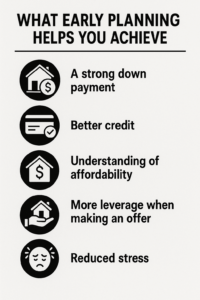
A Quick Snapshot: What Early Planning Helps You Achieve
- A stronger down payment and smoother savings plan
- Better credit, which may unlock lower mortgage rates
- A clearer understanding of affordability based on real numbers
- More leverage when making an offer
- Reduced stress and increased confidence throughout the process
Lisa’s Tip: Start the Conversation Early
If buying a home is even on your mind for the next 6–12 months, start planning for a first home today. You don’t need every answer, and you don’t need a perfect timeline. You simply need a starting point. A short conversation, a peek at the market, a check of your credit score – these early steps build momentum. When the time comes, you’ll step into the process feeling calm, prepared, and empowered. A little early effort goes a very long way.